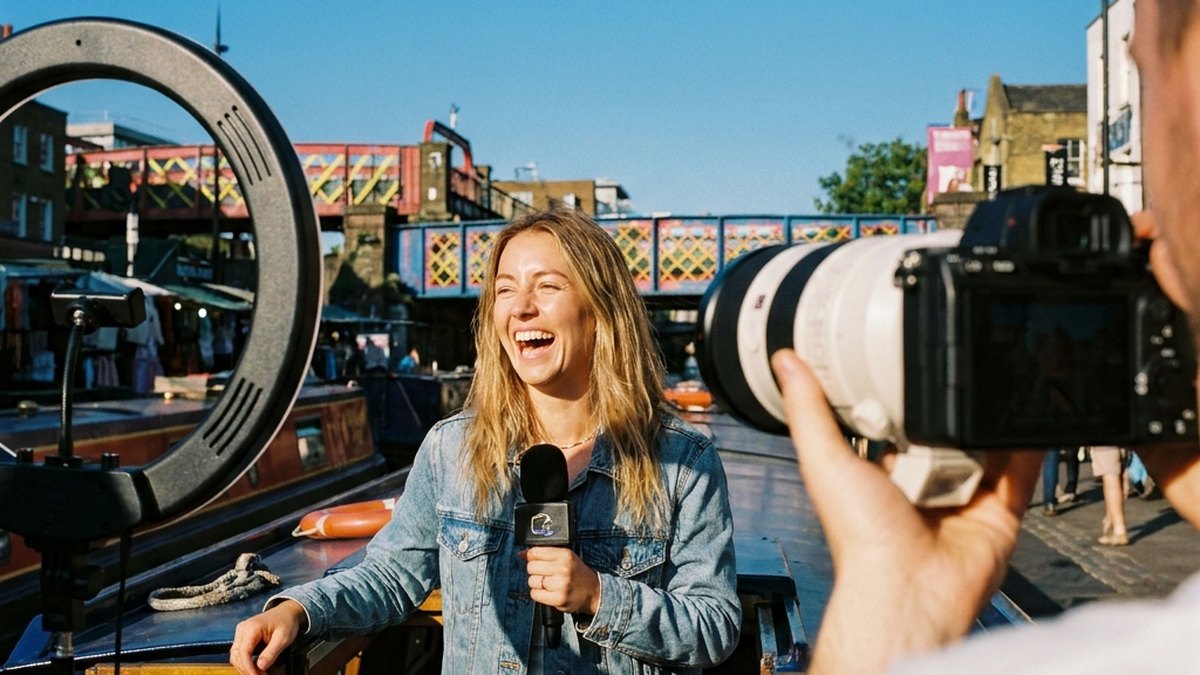
What a month of content physically consists of
Strip away the language and a retainer is three things: a shoot, an edit, and an organised handover. The shoot is the visible part and the shortest. The edit is where most of the hours go, particularly on vertical video, where a ten-second reel can take forty minutes once captions, sound and grading are done.
The handover matters more than people expect. Two hundred loose files in a Drive folder is not content — it is homework. A proper delivery is foldered by week, named by format, and each video sits alongside its own thumbnail and a caption suggestion, so whoever schedules it can do a month in half an hour.
The tiers, honestly
| Tier | Shoot time | Typical output | London price per month | Suits |
|---|---|---|---|---|
| Light | Half day, monthly | 4-6 videos, 15-20 stills | £500-£700 | Solo founders, small cafés, new accounts |
| Standard | Full day, monthly | 8-12 videos, 30-40 stills | £800-£1,400 | Restaurants, gyms, clinics posting 3-5 times a week |
| Heavy | Two days, monthly | 16-24 videos, 60-80 stills | £1,800-£3,000 | Multi-site brands, daily posting, paid ad creative |
Those are London market ranges, not just mine. My own social media content packages start at £500 a month. Where a quote sits inside a band usually comes down to travel, how many locations we cover, and whether the videos need subtitling in more than one style.
What a shoot day actually looks like
People imagine a film crew. It is one person, two bags and a light stand, arriving at nine and gone by one. The order matters more than the kit. I front-load the things that need the most concentration while everyone is fresh, and leave the loose, human material for the end when people have forgotten the camera is there.
A typical half day in a Shoreditch office or a Peckham studio runs roughly like this: the first hour is portraits and anything needing controlled light, the second hour is the space and the process shots, the third hour is vertical video with the founder talking, and the last half hour is the detail material that fills gaps for months — hands, textures, tools, the sign on the door.
The last half hour is the part clients try to cut when the day runs late, and it is the part I would protect. Detail shots are what stop a feed looking repetitive in week three. Nobody has ever regretted having forty background frames sitting in a folder.
What is included that you should check for
- Every crop, not one. 9:16 for reels and stories, 4:5 for the feed, 1:1 for ads and delivery platforms. Ask explicitly, because re-cropping later ruins framing.
- Burned-in captions on video, not just auto-captions that vanish when the file is reposted elsewhere.
- Raw-ish extras. A handful of unedited clips you can cut yourself for reactive posts.
- A usage licence that covers paid ads, if you intend to put money behind anything. Organic-only licences are common and catch people out.
- Rollover or expiry rules for unused shoot days.
What is usually not included
Strategy, for a start. A content package buys you assets, not a marketing plan, and I am wary of anyone bundling both cheaply. Genuine strategy work is a separate discipline and a separate invoice. Community management is another. Replying to comments and DMs is a daily job and no photographer is doing it properly alongside shooting.
Scheduling and posting sit in the middle. Some retainers include it, most do not. If yours does not, budget twenty minutes a week internally or the beautifully organised folder just sits there. I have watched that happen more than once, and it is a depressing way to waste £500.
Paid media, copywriting beyond a suggested caption, and talent hire are all outside a standard package too. If a proposal includes every one of those for the same £600 a month, something in the list is being done badly. Ask which parts are the priority and let the rest go.
How the price is built
A monthly figure hides the fact that you are buying two very different things. Roughly a third of the fee covers the shoot day itself, travel across London included. The remaining two thirds covers editing, which for vertical video is slow work, plus the organising and the delivery.
That ratio explains most quote differences. A retainer that looks cheap for the same number of shoot hours is nearly always cutting the edit: fewer finished videos, auto-generated captions, one crop instead of three. Ask how many finished assets you receive, not how many hours the camera is out of the bag. It is the only number that maps to what appears on your account.
Why batching beats shooting little and often
Every shoot has fixed costs that have nothing to do with how long the camera runs. Travel across London, parking or the Congestion Charge, carrying kit, setting up lights, packing down. Four separate one-hour visits cost roughly three times what one four-hour visit costs, and produce less, because setting up is where the time goes.
Batching also produces better work. By hour three people have stopped performing. The founder who froze solid in the first twenty frames is now mid-sentence about something they care about, and that is where the usable footage lives. You cannot get to hour three in a one-hour booking.
Is a retainer worth it? Sometimes not
I will talk people out of these. A retainer makes sense when you post at least three times a week, your product or space is visual, and somebody internally owns publishing. If any of those three is missing, you are buying content that will sit unused, and you would be better off with a single branding photography day twice a year.
Seasonal businesses are the other case. A Christmas market trader does not need December content produced in March. Two heavy months beat twelve light ones. I would rather quote you for that honestly than lock in a monthly fee that suits my cash flow and not your calendar.
How I’d spend year one
Start with three months, not twelve. Shoot a Standard month first so you find out what your audience responds to, then drop to Light or step up to Heavy based on real numbers rather than a guess. Insist on a short notice period; thirty days is normal and anything longer should make you suspicious.
Front-load the first shoot with evergreen material: the space, the team, the process, the products. That library keeps working for a year. Save the timely, seasonal stuff for months two and three when we both understand the account better. And if your business is a restaurant, run the content day alongside a menu shoot, because the reel formats that work in hospitality are specific enough to be worth planning for.
Most of my retainer clients are within a few miles of the studio, so if you are based in East London the logistics are simple and there is rarely a travel charge. Tell me how often you can realistically post and the right tier picks itself. Send me a note and you’ll hear back inside one working day.