What you are actually commissioning
Conference photography is not one product, it is four or five running in parallel, and each has a different audience. Confusing them is why organisers end up with 800 images and nothing the sponsor can use. Set the deliverables out at the brief stage and the day plans itself.
| Deliverable | Typical volume | When you get it | What it is for |
|---|---|---|---|
| Press selection | 15 to 25 images | During the day, batch per session | Live social, journalists on deadline, partner channels |
| Speaker set | 8 to 15 per speaker | 48 hours | Speaker thank-yous, next year’s promotion, LinkedIn |
| Speaker portraits | 3 to 5 per person | 48 hours | Programme, website, press pack, agency profiles |
| Sponsor recap set | 20 to 40 per tier-one sponsor | 48 to 72 hours | Sponsor recap report, renewal conversation |
| Delegate candids | 100 to 200 | 48 hours | Website, delegate marketing, atmosphere shots |
| Venue and branding set | 30 to 50 | 48 hours | Sales deck, venue relationship, next year’s site |
Multi-day coverage and where the hours disappear
Organisers consistently underbuy hours on day one and overbuy on day two. Day one has registration, the opening keynote, the first sponsor activation and the drinks reception. Day two is usually breakouts and a closing panel, which needs less. If the budget is fixed, weight it towards the opening day and the evening social, because that is where the reusable material is.
The other quiet cost is parallel sessions. A single photographer covering four simultaneous breakout tracks will give you a fifteen-minute sample of each and miss whatever happens in the other three. That is not a limitation of skill, it is arithmetic. If your programme has more than two tracks running at once and you need coverage of all of them, brief a second shooter. If you only need proof that the breakouts happened, one photographer rotating on a timed loop is fine and I will say so rather than sell you a second body.
Speaker portraits: fifteen minutes you have to protect
Speaker headshots are the deliverable most often promised and least often delivered, because nobody guards the time. Speakers arrive late, go straight into a green room, and leave immediately after their session. The fix is boring and it works: a named slot on the speaker’s own schedule, a corner of the green room with a light already standing, and somebody whose job is to walk them over.
Fifteen minutes gets you three to five usable portraits per speaker. Five minutes gets you one, and it will be the one where they are still adjusting their lanyard. If you have twelve speakers, that is three hours of the day committed, so decide early whether you want it more than you want extra delegate coverage.
Keynote framing and the sponsor problem
The keynote frame that gets used everywhere is the one with the speaker mid-gesture, the stage branding legible, and a slice of engaged audience in the foreground. Getting all three needs a position at the side and slightly forward, which means agreeing with the AV team and the venue before doors that a photographer can be there for the first four minutes of each session.
Sponsors want their logo in frame, and they are entitled to it. The practical issue is that stage backdrops are frequently lit so brightly that the logo is the only correctly exposed thing in the picture, or a huge LED wall is cycling through slides so the backdrop changes every eight seconds. Both are solvable if I know about them. Tell me the sponsor hierarchy in advance and I will make sure tier one is in frame at the moments that matter, rather than shooting 400 frames and hoping.
Delegate candids that do not look staged
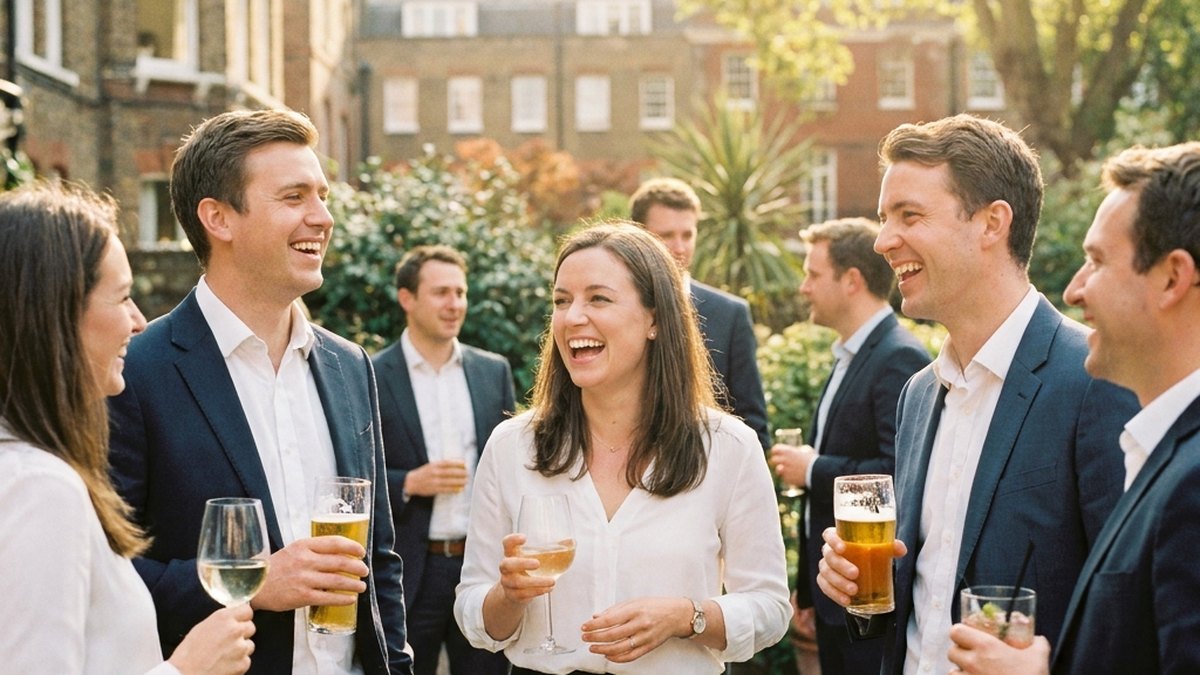
Networking pictures fail when everyone is staring at the lens. I roam with a 35mm and shoot from within the conversation rather than across the room, which gives warm, close frames people are happy to be tagged in. Coffee breaks are far more productive than the formal networking hour, because delegates are relaxed and the light near the catering is usually better.
One caution on lighting. Conference venues in London are a soup of tungsten uplighters, daylight atriums and LED washes, sometimes within four metres of each other. Around the exhibition stands I will often bounce a small flash off a ceiling to keep skin tones sane. It is unobtrusive and it is the difference between usable candids and orange ones.
Press turnaround during the event
Agree this in writing before the day: a batch of edited images after the opening keynote, another after lunch, another after the closing session. Say who receives them and in what format. Journalists working to a same-day deadline will use whatever arrives first, and if that is a delegate’s phone photograph, it is not your branding in the coverage.
Practically this means I need twenty minutes off the floor after each key session, plus a reliable place to sit with a laptop. Build that into the plan rather than assuming it happens by magic between sessions.
The briefing document that makes the difference
- Running order with must-have moments highlighted, including exact room names.
- Photographs and names of VIPs, board members and anyone who must not be missed.
- Sponsor tiers, in order, with which activations need documenting.
- Any restrictions: slides not to be photographed, delegates who have opted out, embargoed products.
- One named on-site contact with a mobile, who knows faces and knows the building.
- Delivery expectations: press batches, crops needed, and where files should go.
- Access details: loading bay window, security list, and whether there is anywhere at all to park, which in the City there is not.
If I were booking this myself
If I were booking, I would spend the marginal budget on turnaround and speaker portraits rather than on a second photographer. Sponsors renew on the strength of a recap report they receive quickly, and speakers promote your event on their own channels when you send them a good portrait within two days. Extra coverage of breakout sessions nobody looks at again does neither.
I would also be honest with yourself about the delegate candid count. Nobody has ever used 400 networking photographs. Two hundred good ones, tightly culled, get used far more than a dump of everything shot.
Rates and coverage patterns are on the event photography page, and if you want a sizzle reel or speaker clips alongside stills, event videography works well on the same booking. For the shape of a single-day programme hour by hour, my event photography walkthrough covers it, and headshot pricing for speaker portraits sits on the headshot page. Send the running order to my contact page and I’ll mark up where the hours really go, including for venues across central London.