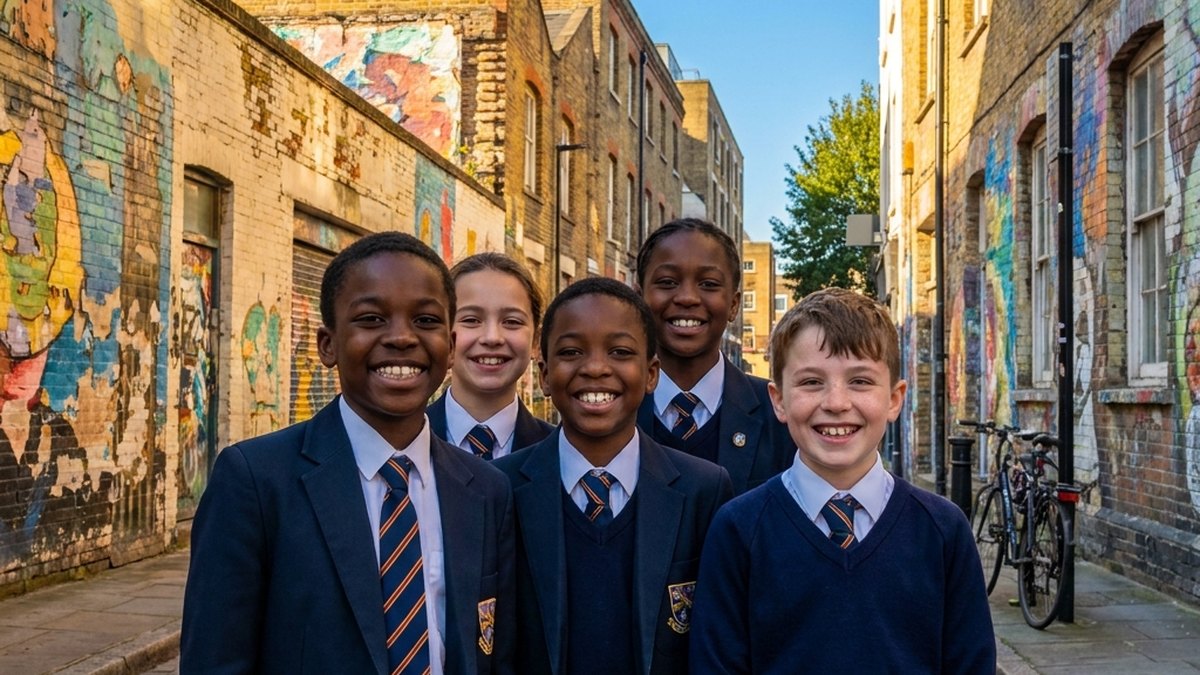
What a school is buying
A school booking a photographer is buying six different things at once, and most contracts only price for one of them. Class groups. Individual portraits for the parent order forms. A whole-school panoramic that takes over the playground for twenty minutes. Leavers’ photos for Year 6 or Year 11. Staff portraits nobody asks for until the website needs updating. And the prospectus and website images the marketing budget quietly needs every September.
Staff portraits are the one schools undervalue most. A head teacher will spend weeks on the prospectus copy and then use a photo taken on someone’s phone in the staff room, and it looks like it. I treat staff portraits the way I would treat corporate photography from £250 for any office: same background, same light, five minutes a head, done before the hall fills up with children.
None of this is the photo day most people picture. Sports days, carol concerts and open evenings for prospective parents are a different job with a different rhythm, closer to event photography from £350 than to a portrait session, and worth booking separately rather than folding into the main contract. A prospectus shoot booked at the same time as the main photo day usually saves a second visit and a second fee.
Before you sign anyone, look at what they’ve delivered elsewhere recently. Ask for recent portrait and group work, not a website gallery curated from a decade of shoots.
The paperwork to ask for before anyone comes on site
Ask for this before a date goes in the diary, not on the morning of the shoot. A photographer who hesitates over any item here is telling you something.
| Document or check | Who provides it | Who in the school holds a copy | How often it should be renewed |
|---|---|---|---|
| Enhanced DBS certificate | The photographer | Safeguarding lead or office manager | Every three years, or per the school’s own policy |
| Written safeguarding or child protection policy | The photographer | Safeguarding lead | Reviewed annually |
| Public liability insurance certificate | The photographer | Business manager | Checked at each renewal date |
| Written data processing agreement | The photographer | Data protection officer | Agreed at the start of each contract |
| Parental consent register | The school | Class teacher or office | Updated before every shoot |
| Image storage and retention plan | The photographer | Data protection officer | Reviewed annually |
| Supervision arrangement for the day | Agreed jointly | Office manager | Confirmed before each visit |
| Risk assessment for the hall | The photographer | Site manager | Per venue, per visit |
| Photographic ID on arrival | The photographer | Reception | Every visit |
I bring all of this as a matter of course. It takes five minutes to hand over, and it should never feel like an inconvenience to produce.
Consent and images, in plain English
This is not legal advice, and I am not a solicitor. Your safeguarding lead and data protection officer decide what your school needs, and the Information Commissioner’s Office publishes guidance worth reading before a contract is finalised.
In practice, consent lists arrive late. A form goes home in a book bag, a parent forgets, and the list handed to me on the day has three names missing from what the class teacher carries in her head. I ask for the list on the morning of the shoot, not the week before, because that is when it’s most accurate.
Children who must not appear online
Every school has at least one. It might be a safeguarding reason, a family court order, or simply a parent who has said no. I ask for this list separately from the general consent register, in writing, and check it against the class list before a single group shot goes online anywhere.
Siblings and shared images
Photographing siblings together for a family print is common and usually welcomed. It still needs its own line of consent, because a younger sibling in another class might not sit on the same list as the child whose form triggered the request.
Deletion timescales vary by studio and by contract length. Ask what happens to files once the order window closes, and get the answer in writing rather than a verbal reassurance on the day.
The logistics of a London school day
A hall booked from 08:30 sounds generous until 240 children need to move through it before lunch. Class lists rarely match the register exactly. A child has moved up a set, someone is off sick, and the “quick recount” eats ten minutes you did not have.
Year 6 leavers get their own slot, usually last, because nobody wants a tearful group photo derailing the reception class behind them. The whole-school panoramic needs a wet-weather plan agreed from the start; a playground shot rearranged at 08:45 because of rain is a different job to the one that was booked.
Parking near a Hackney primary is close to impossible. I have more than once left the car in a loading bay ten minutes’ walk away and carried kit in on foot, and the lunch hour cannot slip, whatever else has gone wrong that morning.
None of this is about the camera. It is about the class list, the running order and how many portraits an hour is realistic for a reception class that hasn’t sat still since nine, and whether the whole-school panoramic still happens if the forecast turns.
How the money usually works
Most primary schools work on a free-to-school model: the photographer covers the day at no cost to the school and makes the money back through print sales to parents afterwards. It works well, provided the school still asks to see the price list parents will actually receive.
A flat fee is the other common arrangement, usually for secondaries, sixth forms or schools that want the images without a parent sales process attached. There is a full breakdown of both models, with real numbers, in the sibling article on school photography pricing, worth reading before you commit to either one. Neither model is inherently better; it depends on whether the school wants to manage a sales process at all.
Red flags
- No written safeguarding policy, or one that is clearly copied from somewhere else
- A DBS certificate mentioned often but never actually shown
- Images stored on a personal or consumer file-sharing account rather than a named, access-controlled system
- No named data controller you can put a question to
- Subcontracted photographers the school has never met or vetted
- A hard-sell email sequence to parents that starts before the prints have even shipped
Any one of these is worth a conversation. Two or more, and I’d walk away from the contract regardless of price.
The DBS certificate is the easy part
Here’s my honest view: every photographer working in a school has a DBS certificate by now. It is the baseline, not the differentiator, and treating it as the main safeguard misses what usually goes wrong on the day.
A certificate says nothing about how someone behaves in a hall with thirty six-year-olds who have never met them, on a day when the running order has already slipped twenty minutes. That is a different skill entirely, and it doesn’t show up on paper. Plenty of well-vetted photographers are still bad with children; the two things are not the same test.
Ask instead how they would handle a child who will not sit still, or a class list that arrives with three names missing at 08:40. Watch the first ten minutes of the day rather than the certificate in the envelope. That is where you learn whether the day finishes on time.
Send the date, the postcode and how many children need photographing, and ask for the paperwork in the same message. I reply within one working day with the DBS certificate, insurance and safeguarding policy attached.