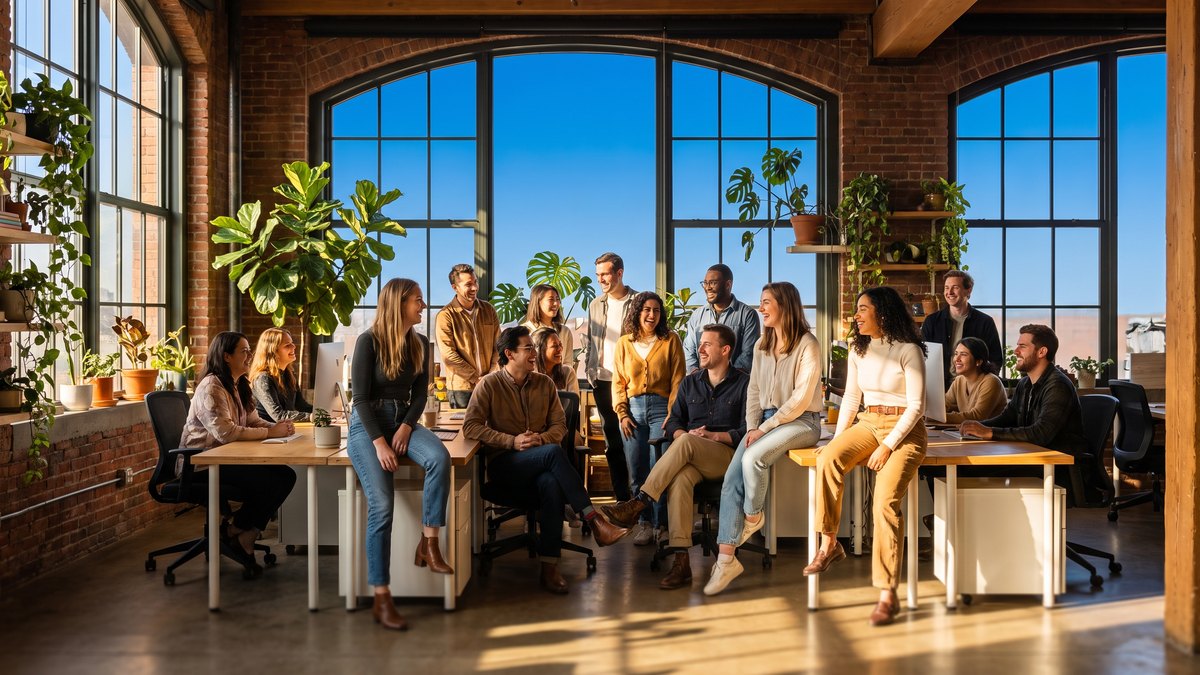
What office photographs are actually for
A set of office photos serves one of five jobs: a careers page, an investor deck, a press pack, an announcement that the business has moved floors, or a landlord’s or agent’s marketing for the building itself. Each one wants something different from the same four walls.
A careers page wants people, daylight and a bit of mess on a desk. An investor deck wants scale: rows of desks, a boardroom, a wall of monitors. A press pack wants two or three images that work small, on a phone screen, in a news app.
Work out which of these you need before I turn up, because “some nice shots of the office” is not a brief. It produces forty generic frames nobody uses. If the images support recruitment or a fundraising round, say so before the day, and read how to choose a corporate photographer in London for the wider brief.
Empty, busy, or staged
Every office shoot is a negotiation between three states: empty, normally busy, or staged with a handful of volunteers stood where real staff would be. None is right for every shot, and a photographer who tells you to pick one for the whole day has not thought it through.
| Shot | Office empty | Office at normal occupancy | Staged with volunteers | What I recommend |
|---|---|---|---|---|
| Reception | Fine, even flattering | Good if someone is at the desk | Rarely needed | Shoot it first thing, no need for people |
| Open-plan wide | Looks abandoned | Best option, natural spread of people | Looks obviously arranged | Wait for two-thirds occupancy |
| Meeting room | Fine for the table and view | Good with a real meeting in progress | Works well, easy to stage | Stage it if timing is tight |
| Breakout and kitchen | Flat and cold | Best, catches real conversation | Looks stiff and awkward | Normal occupancy only |
| One person at a desk | Not possible | Good, pick a tidy backdrop | Fine with a confident volunteer | Either works |
| Corridor walking shot | Looks like a hotel at 3am | Good if someone walks through | Best, easy to direct | Stage this one |
| Stairs | Fine, architectural | Good with movement | Fine with one or two people | Either works |
| Exterior and signage | No difference | No difference | No difference | Shoot any time light is good |
| View from a window | No difference | No difference | No difference | Shoot on a clear morning |
The pattern matters more than any single row. Some frames want people, some want architecture. Treating the whole shoot as one setting is how offices end up with images that all feel like the same afternoon. Have a look through London workspaces I have photographed to see the mix in practice.
Why the day starts at 08:00
I ask for access from 08:00 even when the office doesn’t open until nine. That hour gives a tidy floor, blinds set to one level, lights on before daylight catches up, and screens woken so nothing looks abandoned. It also covers the two shots that must happen before anyone arrives: reception with no queue, and any desk that needs styling before its owner sits down.
The running order
- 08:00: building access, security pass sorted the day before, kit into a goods lift where required
- 08:15: reception, exterior and signage while the street is quiet
- 08:45: desks that need tidying before the morning undoes it
- 09:30 to 11:30: open-plan wides and desk portraits as the floor fills to two-thirds
- 11:30: breakout, kitchen and corridor shots once people have settled in
By the time the first coffee run happens, reception, exteriors and any staged desks are done. Everything after that relies on real occupancy, which is why the order front-loads the shots that do not need people in them.
London building problems
Shared buildings have their own rules, rarely written down until you ask. A managed lobby on Bishopsgate might ban tripods outright, in which case I shoot handheld or on a monopod and adjust the shutter speed. Canary Wharf estate buildings route everything through a security desk that wants two days’ notice and a kit list, so I email that in advance rather than turning up and hoping.
Getting kit in is its own job. A goods lift booking, a loading bay slot for the van, and the ULEZ charge if I am driving in from outside the zone all need sorting before the date is fixed. There is no parking anywhere in the City worth mentioning, so I plan for a short walk from wherever the van sits, kit on a trolley rather than three bags.
None of this is difficult once it is written down. It just needs asking about a week out, not assumed.
Consent, screens and things that must not appear
Tell staff a week ahead that photography is happening, and offer anyone who would rather not be in frame the chance to say so. Most people don’t mind. A few do, and it is easier to route around one desk than explain afterwards why someone’s face is on a careers page they never agreed to.
What needs sorting a week out
- An email or message naming the date and asking for an opt-out
- A note to reception and security so the shoot is not a surprise
- Confirmation that any confidential room will stay locked for the day
What needs sorting on the day
- Screensavers on, or screens angled away from camera where they cannot be
- Whiteboards wiped, or turned to blank if wiping is not possible
- Visitor passes and client logos out of frame or covered
- Desks cleared of anything with a client name or a home address on it
This is not legal advice, and I am not the person to ask about your data or HR policy. Check that separately. What I can do is flag anything that looks like it should not be on camera and leave the decision to you.
What comes back, and what it costs
A half day on site, up to four hours at one location, runs corporate photography from £250, rising to £600–£900 for a full day covering seven to eight hours across one or two locations. Either booking delivers 40 to 80 edited images, depending on the length of the day and how much goes into wides versus portraits.
Delivery is 48 hours from the shoot, and the licence covers whichever uses we agreed at the brief stage: careers page, investor deck, press pack, or the landlord’s own marketing. Travel beyond Zone 3 adds £30. Extra edited images beyond the agreed set are £15 each, and retouching past the standard clean-up is £8 to £25 an image.
Adding video to the same day
If you need short clips as well as stills, a lot of the setup overlaps. Lighting a desk for a photo mostly works for a walking shot on the same desk. Bringing me in for both on one access day is usually cheaper than booking two visits, and corporate video from £600 covers a same-day edit if you need something to post within the week.
Empty offices photograph badly and everyone books them anyway
Most companies ask for a Saturday, because an empty floor feels tidier to arrange. I’d argue that’s backwards. An empty office says “we have no staff” as clearly as a photograph can say anything, which is the opposite of what a careers page or an investor deck needs to say.
Two shots are the exception: exterior and signage, and the view from a window. Neither needs a person in it, and both photograph the same whether it is Tuesday lunchtime or Sunday morning. Everything else, reception, the open-plan wide, the kitchen, a desk with someone at it, wants a floor with people on it, ideally around two-thirds full so there is room to stand and something happening in every direction.
A Friday afternoon empty shoot is sometimes the only option, and I won’t pretend otherwise. If the business has just moved in, or the team works remotely four days a week, there may not be a busier day to book. In that case I lean harder on architecture and natural light, and I say plainly on the day that the recruitment shots will have to wait for a different visit.
Tell me the date, the postcode and roughly how many people will be on the floor, and book an access day that fits your busiest normal Wednesday. I will come back within a working day with a running order built around your building’s rules.