What each one actually is
A LinkedIn headshot is a tight head-and-shoulders frame. Face dominant, clean or softly blurred background, one clear expression, shot and cropped so it still reads at 48 pixels wide. Everything in it exists to make your eyes legible at thumbnail size.
A professional portrait is wider. It brings in posture, hands, a jacket, sometimes a desk, a wall, a window, a workshop. It carries more lighting shape and more of your personality, and it is built for places where the image gets to be large: an about page, a press kit, a speaker bio, a pitch deck, the back of a book.
Both come out of the same camera, often the same hour. The difference is intent, and intent changes the crop, the lens and the background before a single frame is taken.
Side by side
| LinkedIn headshot | Professional portrait | |
|---|---|---|
| Crop | Chest up or tighter | Waist up, or full environment |
| Background | Plain, or heavily blurred | Deliberate and part of the story |
| Session length | 20 to 45 minutes | 60 to 120 minutes |
| Looks delivered | One or two | Three to six |
| Best for | Job hunting, networking, team pages, CVs | Websites, press, speaking, investor decks |
| Falls down when | Used as a hero image on a homepage | Squeezed into a circular profile thumbnail |
| London price | From about £150 | About £350 to £600 |
| Realistic shelf life | 2 to 3 years | 3 to 5 years |
The verdict for anyone job hunting
If you are applying for roles, the headshot wins and it isn’t close. A recruiter’s shortlist is a vertical list of circles. A wider portrait shrunk into that circle becomes a beige blur with a suggestion of a face in it, and the thing that makes portraits good, the space and the context, is precisely what disappears. I have cropped plenty of beautiful environmental portraits down to a LinkedIn square, and they always look like a compromise, because they are one.
The counter-argument I hear is that a portrait shows more personality. It does, on a page that gives it room. LinkedIn does not give it room. Get the headshot right first, then treat the portrait as a bonus.
There is a quick test for this. Open your own profile on a phone, hold it at arm’s length, and see whether you can tell that it is you. If you can’t, the crop is too wide, however good the picture looks at full size on a laptop.
What actually goes wrong with LinkedIn photos
Most bad profile pictures are not badly lit. They are badly chosen. The recurring offenders, roughly in order of how often I see them:
- A cropped wedding photo, complete with a stranger’s shoulder and a confetti hand.
- A holiday shot with hard midday sun carving black shadows under the eyes.
- A selfie taken in a parked car, which is somehow always slightly green.
- A photo from 2016 that no longer resembles the person walking into the interview.
- A group shot at a conference, cropped so tight it has gone soft and pixelated.
- Sunglasses on the head. It reads as holiday, not as work.
None of that needs a studio to fix. It needs one frame where the light is even, the eyes are sharp and you look like someone a stranger would happily email.
The fix is rarely dramatic either. Even light, eyes in focus, a background that is not fighting you, and a crop that puts your face in the middle of the circle rather than off to one side. I have shot profile pictures against a plain white meeting room wall in Aldgate with one light and a reflector, and had people say it was the first photograph of themselves they had liked in years. The room matters far less than most people assume.
Job seekers, founders and consultants want different things
If you are job hunting
Book the tight headshot, get one strong frame and one alternative with a slightly different expression, and use the same picture across LinkedIn, your CV header and any application portal. Consistency helps a hiring panel remember you between the shortlist and the interview. A single sitting from £150 covers this comfortably.
If you are a founder
You need both, and you need more than one frame of each. Investor decks, press requests, event organisers and your own site all want different shapes: a square, a landscape banner crop, a vertical for a speaker card. That is the point at which branding photography pays for itself, because a founder who has to scramble for a usable photo the week of a funding announcement always ends up with a screenshot from a webinar.
If you are a consultant or coach
You sit in the middle and your profile picture is closer to a shopfront than a formality. Prospective clients look you up before the first call. Go tight for LinkedIn, then take two or three wider frames with an environment that matches what you actually sell: a table and a notebook if you run workshops, a clean studio wall if you sell precision.
Can one session deliver both?
Yes, and for most people it should. A 45-minute sitting in my central London diary usually breaks down as ten minutes of settling in and light checks, fifteen minutes of tight headshot work, a backdrop or position change, then fifteen minutes wider with a jacket on or off. You leave with a clean LinkedIn crop and three or four portraits, delivered within 48 hours.
The limit is honesty about looks. Every additional background, outfit or lighting setup costs roughly ten minutes, and past four looks people start to fade and the frames get stiff. Two backgrounds and two outfits is the sweet spot. Anything beyond that is usually vanity rather than utility, and I will say so.
What the shoot feels like
The first five minutes matter more than the gear. Almost everyone arrives braced. Shoulders climb, jaws set, hands go somewhere unnatural. I tether the camera to a laptop so you can see frames as they happen, because a person who has just seen one good picture of themselves relaxes faster than any amount of reassurance achieves.
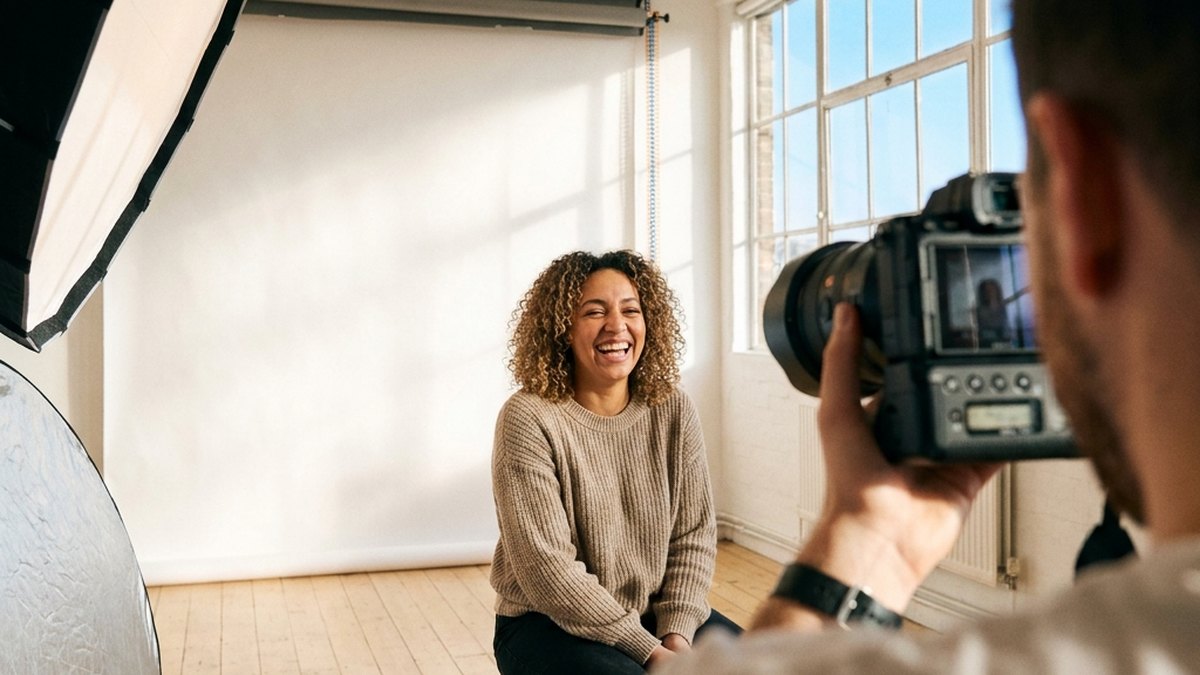
Location changes the feel more than the price. A window-lit sitting in Shoreditch is soft, quiet and slow, and suits people who need a minute. A two-light setup in a City boardroom is crisper, more formal and much faster, which is what you want when twelve colleagues are queueing outside for their headshot slot. Neither is better. They just produce different pictures, and it is worth deciding which one your role calls for.
The short version
Get the LinkedIn headshot right, treat the portrait as a by-product of the same hour, and don’t pay separately for two sessions unless you genuinely need location work. If your budget is tight, spend it on the tight crop. It is the image that gets seen a hundred times a week, and it is the one a recruiter judges in four seconds.
One more opinion: update it every two to three years, not every year. Nobody is impressed by a rotating gallery, but arriving at an interview looking noticeably different from your profile does quietly cost you something. If you want to compare what each option costs before you commit, the London headshot pricing breakdown covers per-head and session rates.
If you already know which one you need, dates and studio availability are quickest to sort on the contact page. Replies usually go out the same working day.