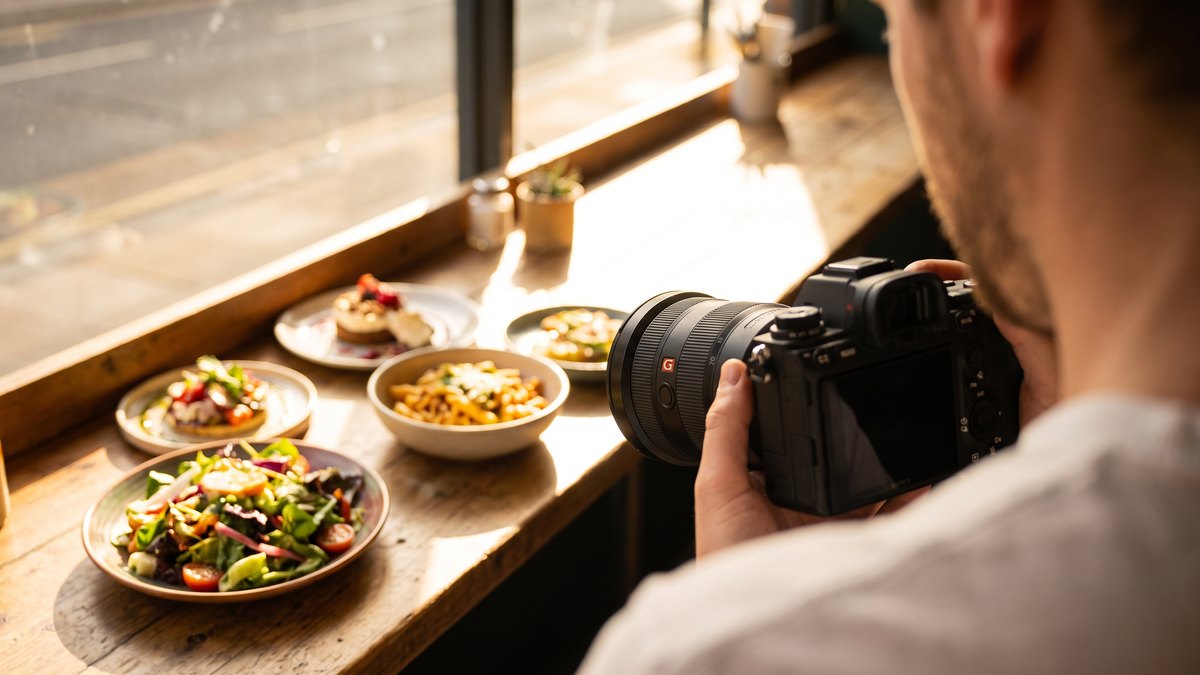
Three ways this work is bought
A food photography job in London gets bought three ways: half day, full day, or per dish. Each suits a different kitchen. Mixing them up is how a restaurant with eight dishes on the menu ends up paying for a full day it cannot fill.
Half a day runs three to four hours and covers twelve to eighteen dishes, or twenty to twenty-five finished images, for £400 to £650. This is the right booking for most independents: a menu refresh, new hero shots for the website, or a seasonal update.
The full day runs seven to eight hours and produces thirty to forty finished images for £850 to £1,200. It suits a relaunch, a brand shooting several sites’ worth of content in one visit, or a menu large enough that twelve dishes barely dents it.
Per-dish pricing, £35 to £60 a plate, works for small additions: two new specials, a seasonal dessert, one hero shot for a delivery app listing. If you are only adding to an existing set, do not book a half day out of habit.
Drinks are priced the same way, at £40 to £70 a serve. A cocktail takes longer than a plate: the ice moves, condensation builds on the glass within a minute, and the pour usually has to be repeated. A list of eight cocktails is closer to a half day than to a quick addition to a food shoot.
Count your dishes before you book. Eight dishes and a couple of drinks shots is a half day, not a full one, and I will say so before taking your money. Restaurant photography from £400 covers the half-day rate; a full day sits above that.
For the fuller version of getting ready for the shoot itself, I have written up how to brief a food photographer separately. This article stays on the money.
What a food photographer’s fee covers
My fee covers the hours booked on site, the agreed number of finished images, a standard licence for your own website and social channels, a standard clean-up per image, and delivery within 48 hours.
What’s in the standard clean-up
- Colour and white balance correction
- Crop and straighten
- Removing stray crumbs, fingerprints and steam marks on glass
- Basic exposure and contrast balancing
What it does not cover: styling beyond basic plating, props I do not already carry, a location fee if we shoot somewhere other than your venue, or a licence extended to a delivery platform, brand partner or press use. Those get quoted upfront rather than left as a surprise on the invoice.
Delivery-app work is its own booking rather than a licence tweak. Twenty to thirty dishes cropped to platform specifications runs £600 to £900, since every image has to be squared, re-cropped and checked against the platform’s rules before it goes out. An empty-room interiors add-on, shot in the hour before service, is £250 for eight to twelve images.
The costs that are not my fee
The photographer’s fee is the number on the invoice. It is not the cost of the morning. Kitchens forget this constantly, then wonder why a £400 shoot left them £600 lighter once the till is checked.
| Cost that is not the photographer’s fee | Who pays it | Typical amount | Can you avoid it |
|---|---|---|---|
| Chef and kitchen time | Restaurant | Half a morning of a chef’s shift | No, always factor it in |
| Ingredients cooked and binned | Restaurant | £80–£150 | Partly, staff eat the rejects |
| A food stylist | Restaurant, if used | £250–£400 a day | Yes, only for hero or brand work |
| Props and surfaces | Restaurant or photographer | £0–£100 | Often, I carry a basic kit |
| Closing for the morning | Restaurant | Lost covers for that service | Sometimes, shoot before opening |
| Location fee if shot away from the venue | Restaurant | £100–£300 | Yes, shoot on-site instead |
| Extended licence for a delivery platform | Restaurant | £25–£60 per image | No, if you need that use |
| Travel beyond Zone 3 | Restaurant | £30 | No |
| A rush turnaround | Restaurant | £50–£150 | Yes, standard delivery is 48 hours anyway |
Add the middle four rows to a £400 half day and the real morning is closer to £700. Most restaurants only budget the top line.
Where a shooting day goes
Twelve to eighteen dishes fill a half day of three to four hours. The maths is not even across the morning: dish one takes twenty minutes to set, light and shoot, dish four takes half that once the angle and the light are already sorted.
Why dish four is faster than dish one
The first plate sets the recipe for the rest: camera angle, flash bounced off the ceiling, where the steam sits, how close I get with the 24-70. Once that is fixed, plates two, three and four move through the same setup. Only a genuine change in dish, colour or vessel resets the clock.
Kitchens plating a shoot need a queue, same as service: one dish finished and shot while the next is under the pass. Every delivery to the back door, a fish order, a veg drop, a keg change, costs roughly twenty minutes of momentum, whether or not anyone touches a plate.
- Confirm the dish order the night before, salads and cold plates first
- Hold deliveries until after the shoot if the kitchen can manage it
- Keep one person free to run plates to the light
Cheap, mid and expensive in London
A student or a keen amateur will shoot a menu for around £150. For a café posting to its own Instagram with no brand guidelines to hit, that is often fine: the food looks like food, and nobody is measuring colour accuracy against a brand book.
Independents like me sit at £400 to £1,200: consistent light, a plating eye, a licence you can actually rely on, and delivery inside 48 hours. This band suits most restaurants, bars and delivery-led kitchens. For the fuller market picture, I have laid out what London photographers charge in 2026 across every category this site covers.
Agency production starts around £3,000 and climbs fast. You are paying for a producer, a stylist, a bigger crew and usually a director. That price makes sense for a national campaign or a chain’s flagship brand shoot. It rarely makes sense for a single restaurant’s menu refresh, and I will say so if a client asks me to quote against it.
What pushes a quote up
Dish count is the obvious one: every extra plate beyond eighteen adds shooting time. Hero images that need building from scratch, rather than a normal service plate, add more again: think a burger stack shot in cross-section, or a cocktail mid-pour.
Retouching beyond the standard clean-up costs extra, as does a hand or a model in frame, since that is a different skill and often a different lens. A stylist adds £250 to £400 a day. An extended licence for a delivery platform, brand partner or press use runs £25 to £60 per image on top of the shoot fee.
If you want short vertical clips alongside the stills for Instagram or TikTok, that is a separate booking, restaurant videography from £600, not an add-on to the photography quote. A package of six to eight clips shot alongside the stills runs £600 to £900, and putting them on the same morning at least spares the kitchen a second disrupted shift.
The kitchen’s time costs more than mine
Here’s my honest number: a head chef and two commis, tied up for a morning instead of prepping for service, cost most London kitchens somewhere between £150 and £300 in wages alone. Add the £80 to £150 of ingredients cooked purely for the camera, and the kitchen’s own contribution to the shoot often outweighs my invoice.
This is why I’d argue shooting on a closed Monday, or before the doors open, beats shooting around live service almost every time. No one gets pulled off the pass mid-shoot. Dishes come out on the kitchen’s schedule, not squeezed between covers, so we get through more plates per hour and the chef is not running two jobs at once.
The exception: breakfast and brunch venues
Cafés and brunch spots break this logic. Their morning is peak service, not dead time, so there is no quiet slot to borrow. For those kitchens, a slower afternoon or a rare closed day works better than trying to recreate breakfast service at 11am for a camera.
Tell me your date, your postcode and roughly how many dishes, and get a quote for your menu. I’ll reply within one working day.